Volunteering While Traveling Slows Brain Aging in Seniors by Up to 20 Percent
In a scientific breakthrough that redefines the very concept of therapeutic tourism and places it within a far deeper social dimension, a recent academic study has revealed that integrating volunteer activities and acts of helping others into the travel itineraries of older adults is not merely an ethical choice that enhances subjective well-being, but rather a highly effective health strategy capable of measurably slowing the rate of cognitive aging by between 15 and 20 percent, thereby transforming the conventional holiday trip into a long-term investment in neurological and psychological resilience for this rapidly growing demographic segment within the global tourism industry. These striking findings emerge from a major investigation conducted by researchers at the University of Texas at Austin and the University of Massachusetts Boston, who analyzed two decades' worth of telephone survey data collected from more than 31,303 individuals over the age of fifty, meticulously comparing their performance on standardized cognitive assessment tests against the extent of their engagement in prosocial behaviors, whether through formally organized volunteering with charities and institutions or through informal, spontaneous assistance provided to friends, neighbors, and relatives in their daily routines, with the statistical models demonstrating conclusively that sustained participation in such activities produces a cumulative, long-term protective effect on mental faculties rather than merely a transient and short-lived boost in cognitive performance.
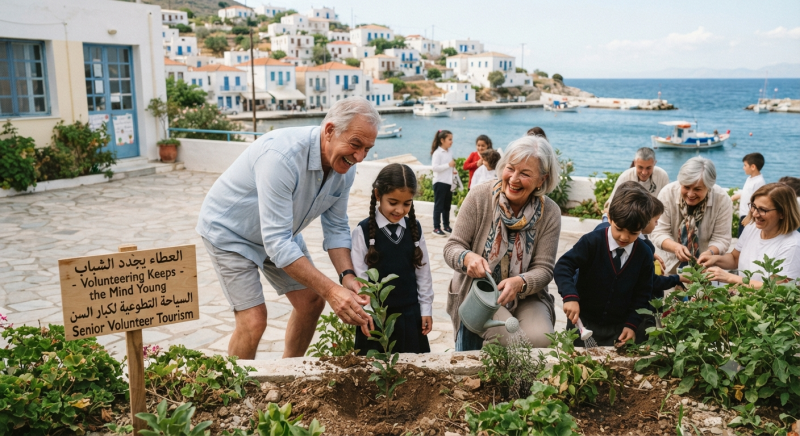
What lends this research particular relevance within the context of travel and tourism is the researchers' observation that the cognitive benefits derived from formal, structured volunteering were remarkably equivalent to those obtained from informal, unstructured helping, which essentially means that travel agencies and tour operators specializing in senior tourism do not need to establish complex bureaucratic infrastructures or costly formal protocols to harvest these neurological rewards; instead, they can achieve them simply by cultivating the right environmental conditions that allow older travelers to engage in natural, unscripted interactions with the host communities they visit, such as allocating time for seated storytelling sessions with local schoolchildren to share life experiences and wisdom, participating in group activities within hotel premises to assist fellow travelers who may struggle with mobility or acclimatization to new surroundings, or even joining modest local initiatives like beach clean-up campaigns or community garden maintenance, because the core cognitive value lies not in the scale of the task but in the accompanying mental stimulation, the requirement for adaptive social navigation, and above all, the breaking of social isolation, which previous studies have already identified as one of the most potent accelerators of mental decline in advanced age.
The granular data from the study further specified an optimal "dosage" for this cognitive medication, one that travel program designers must carefully respect, amounting to roughly two to four hours per week of volunteer or helping activity, which equates to approximately half a tourist day, with the condition that the annual cumulative total must exceed the threshold of one hundred hours to produce the maximum deceleration effect on cognitive deterioration, while also issuing a necessary warning that exceeding this moderate weekly limit may paradoxically induce reverse outcomes, as the physical and mental demands of intensive altruistic work begin to drain the traveler's energy reserves and negatively impact their capacity for recovery and enjoyment of the remaining aspects of their holiday, a caution of paramount importance for an age group whose physical stamina is often more limited than that of younger cohorts and for whom rest and recuperation are essential components of any successful journey.
Perhaps the most attention-grabbing aspect of the study, however, was its documentation of the abrupt reversal effect that follows the cessation of helping behaviors, where the data clearly indicated that seniors who had been regular volunteers or helpers and then suddenly stopped experienced a notable drop in their cognitive test scores and an accelerated rate of subsequent mental decline, a finding that carries a direct and urgent message for tour operators and on-ground travel facilitators, namely the necessity of ensuring the continuity of this positive behavioral pattern even after the physical journey has ended, either by connecting the traveler to online volunteer projects they can continue to support remotely after returning to their home country, or by encouraging them to join peer-support networks for first-time senior travelers where they can exchange practical advice and offer emotional mentorship, so that the beneficial cognitive chain linking altruism to brain health is not abruptly severed merely by a change in geographical location.
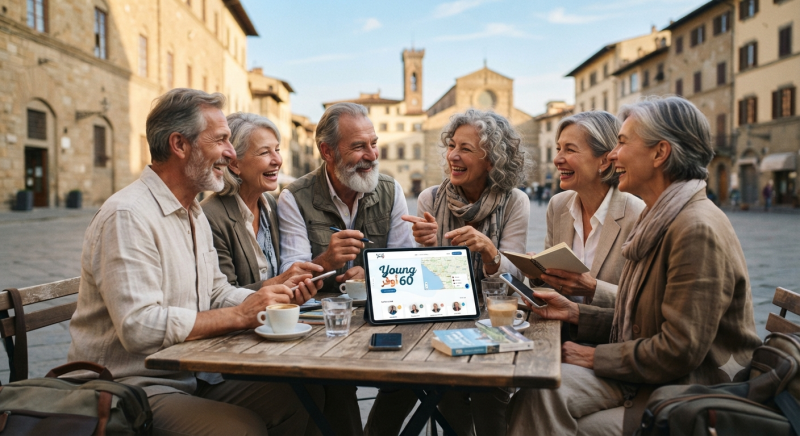
In the final analysis, these results constitute a genuine paradigm shift in how silver tourism is marketed and structured, for the tourism product for older adults is no longer confined to providing comfortable accommodations, nutritious meal plans, and panoramic sightseeing tours alone; it now expands to encompass a unique preventive and therapeutic dimension rooted in the facilitation of safe, well-calibrated opportunities for community giving, and this necessarily demands that travel companies revisit their core itineraries to embed light-touch volunteer activities as a standard feature, while simultaneously training their guides and hospitality staff to actively encourage and facilitate these behaviors without imposing them, all while maintaining a careful equilibrium between active participation and essential leisure time. As the global population of older adults continues to swell and the incidence of dementia and Alzheimer's disease escalates worldwide, this innovative tourism model emerges as a powerful and readily accessible tool not only for enhancing the happiness and self-esteem of senior travelers and affirming their enduring sense of purpose and belonging, but for actually preserving their neuronal integrity and cognitive youthfulness, delivering the powerful and heartening confirmation that the path toward a healthier, sharper old age may not be found in expensive pharmaceuticals or complex mental gymnastics, but in the beautiful simplicity of extending a helping hand to a fellow human being, wherever in the world their travels may take them.